Employee Spotlight: Anson Huang
A member of QuadSci's Gen AI team on turning great predictions into stories people can act on, evaluating Q-Chat and life with five cats.
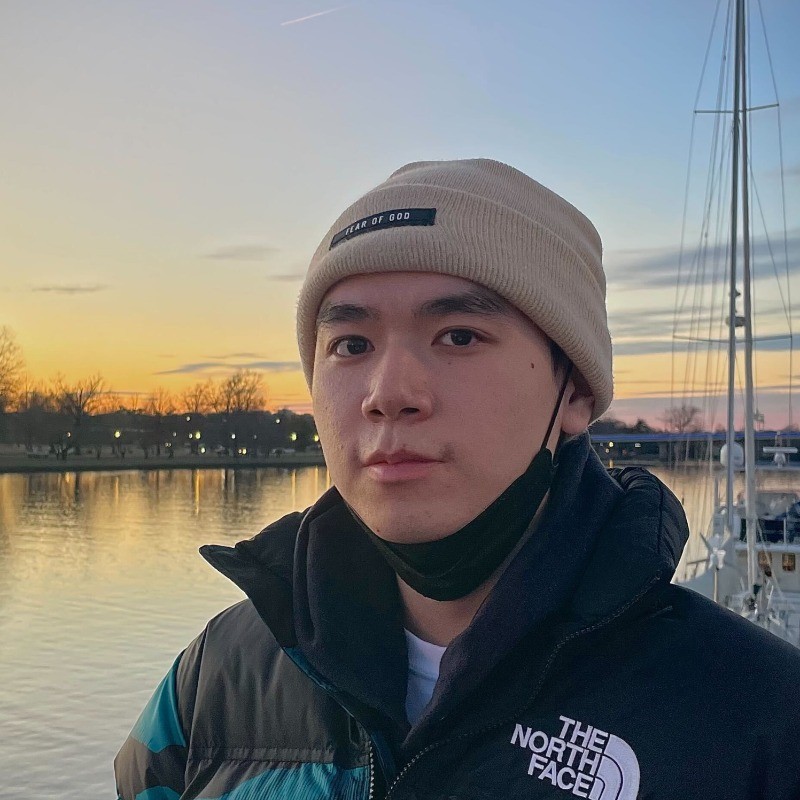
Get to know Anson Huang, a member of QuadSci's Gen AI team focused on making predictive intelligence easier to understand and act on. With a background in machine learning, NLP research and generative AI, Anson is helping shape Q-Chat into an agent that delivers accurate, relevant and actionable insights for revenue teams. Learn more about his work, his approach to building useful AI and life with five cats.
Turning Great Predictions into Stories People Can Act On
When I interviewed at QuadSci, Dan told me clients were blown away by how accurately our model forecasts churn and growth 12 months out. What drew me to the Gen AI team is the chance to translate those forecasts for CSMs and sales reps: which accounts are at risk, which are growing, and where to focus first. That's an actionable answer, not another piece of good-to-know info from a generic LLM.
Where I'm coming from
I studied computer science with an ML concentration at Georgia Tech, then went deeper into NLP at Penn, where I published two research papers on generative AI. After my master's, I joined a startup called Flik AI and built an agent from scratch that helps creatives produce posters, commercials, and short films.
What I'm building
My main focus is evaluation for Q-Chat, our conversational agent. New models launch monthly, sometimes weekly, and each one promises to be better. But better on a public leaderboard doesn't always mean better for a CSM or sales rep preparing for a call. So I measure Q-Chat on conciseness, tone, faithfulness, and groundedness, among others, alongside speed, cost, and stability. That lets us adopt a new model only when it earns its place, and it lets us tune each client's deployment around their own products and customers.
What "useful" means to me
Accuracy is the floor, not the finish line. An agent can print every number correctly and still fail a CSM or sales rep who needs to know what to do on Monday morning. Tone and narrative are the most overlooked parts of building agents, and they matter most when your users are non-technical. We built a taxonomy that explains the different signals coming out of our ML model, so Q-Chat can speak in language our users understand and tell a good story about each account.
One thing about me
Outside of work, I collect Pokémon cards, play badminton, and share my home with five cats. Yes, five. They're not involved in model evaluation, though I'd trust their tone feedback.